What is avascular necrosis?
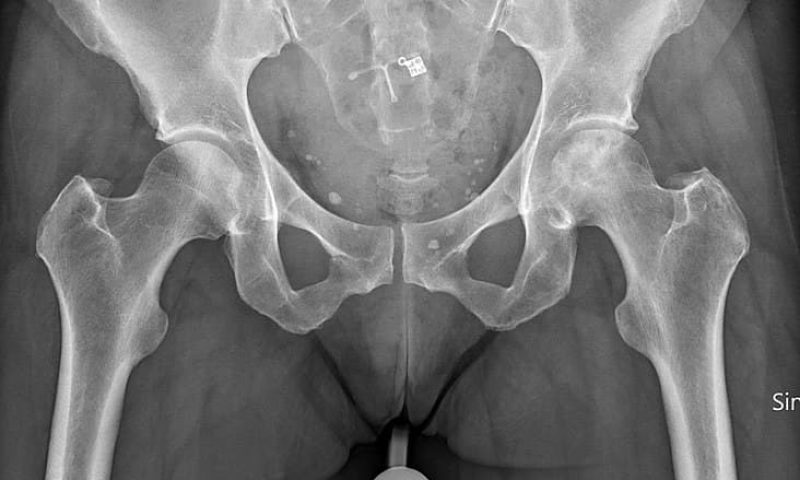
Avascular necrosis is a degenerative bone condition. It is a disease that is a result of the short term or permanent loss of blood supply to the bone. The lack of blood supply to the bone can lead to tiny breaks in the bone which can cause the bone to collapse. The condition is also known as osteonecrosis. If avascular necrosis occurs near a joint, the joint surface may in turn collapse. The most common sites of avascular necrosis are the femoral head, knee, talus, and humeral head. The hip is the most common site of avascular necrosis.
What are the causes of avascular necrosis?
Avascular necrosis can occur as a result of several medical conditions. Avascuar necrosis may be the result of an injury, broken bone, damage to blood vessels, long term use of medication such as corticosteroids, long term heavy use of alcohol, or certain long term chronic health conditions. Some of these chronic health conditions include osteoporosis, diabetes, blood disorders such as sickle cell anemia, diabetes, cancer treatments and radiation therapy, HIV, lupus, and organ transplants. Fractures can cause avascular necrosis because the blood vessels supplying the bone can be damaged through the trauma. In some instances, chronic pancreatitis can also cause avascular necrosis of the femoral head, which may cause hip problems.
What are the symptoms of avascular necrosis?
The symptoms of avascular necrosis can vary based on the person, affected bones, and stage of the condition. One of the most common symptoms of avascular necrosis is long term pain in the affected joint. As avascular necrosis continues to progress, the pain may become more of a constant and severe nature. Avascular necrosis can also severely limit a person’s range of motion by causing stiffness in the joint that is affected. The joints may also feel weak and unstable in the more advanced stages of the disease, therefore increasing the risk of falls due to impaired balance. The affected joints may also swell, particularly after physical activity. Additionally, cartilage damage may cause the joints to begin clicking or locking.
How is avascular necrosis treated?
Avascular necrosis may be treated with medications such as NSAIDs (non-steroidal anti-inflammatory drugs) to reduce inflammation and pain. In some instances, it may be appropriate to use assistive devices, such as a walker or crutches, to reduce weight bearing on the affected joint and the pain that may be associated with ambulation. Physical therapy may also be helpful to decrease pain and increase mobility, as well as improve range of motion of the joint.
Different surgical approaches may be taken as well. Core decompression may be used to relieve pressure within the bone by drilling a hole in the affected area. This may help improve blood flow and stimulate bone growth. In an osteotomy procedure, the bone can be reshaped or realigned to reduce any stress on the affected area, which can help delay the need for a joint replacement surgery. However, when the joint is severely damaged, it may be necessary to have joint replacement surgery. The affected joint will be removed and then replaced with an artificial joint. One newer approach is regenerative therapy. In these therapies, stem cell or platelet injections may be used to promote tissue regeneration and stimulate healing in avascular necrosis.
Can I get disability benefit for avascular necrosis?
If you have worked and paid taxes on your income for at least five of the past ten years and have a condition which has lasted or is expected to last for at least one year that is preventing you from performing work activities, you may be eligible for Social Security Disability Insurance benefits. You also must be under the age of 67, which is full retirement age, in order to receive Social Security Disability benefits. If you are at full retirement age, your benefits may convert instead to Social Security Retirement benefits.
What is the Social Security Disability evaluation process?
Social Security follows a five step evaluation process to determine a person’s eligibility for Social Security Disability Insurance benefits. First, you must not be engaging in what Social Security refers to as “substantial gainful activity.” This means that you must have either stopped working completely or are working on a very limited part time basis earning no more than $1,350 gross per month in 2023. Second, you must have what Social Security determines to be a “severe impairment.” A “severe impairment” is a medically determinable impairment that significantly prevents you from engaging in normal work activities such as sitting, standing, walking, pushing, pulling, reaching, and handling. This may also include mental activities such as understanding and remembering instructions and interacting with coworkers, supervisors, and the public. Social Security will use your medical records to determine the severity of your impairment, so it is important to receive ongoing treatment for your conditions and inform your attorney of significant developments in your treatment and condition.
Third, Social Security will determine whether your condition meets the criteria of one of its listings of impairments. If your condition does not meet a listing, Social Security will evaluate your residual functional capacity, which is your ability to perform work related physical and mental tasks. Social Security will then consider, in light of these limitations, whether you are able to return to your past work. Your past work is comprised of jobs which you have performed at a significant level over the past fifteen years. If you are unable to perform your past work, Social Security will determine whether you are able to perform any other work. If you are unable to perform any jobs that exist in the national economy at all with your limitations, you will be found disabled.
LaBovick Law Group is here to help with your disability benefits.
Getting the Social Security Disability application process started can be an overwhelming and stressful endeavor. Our legal team at LaBovick Law Group has assisted thousands of clients with obtaining Social Security Disability benefits and is here to help. Give us a call at (561) 625-8400 to get the process started today.